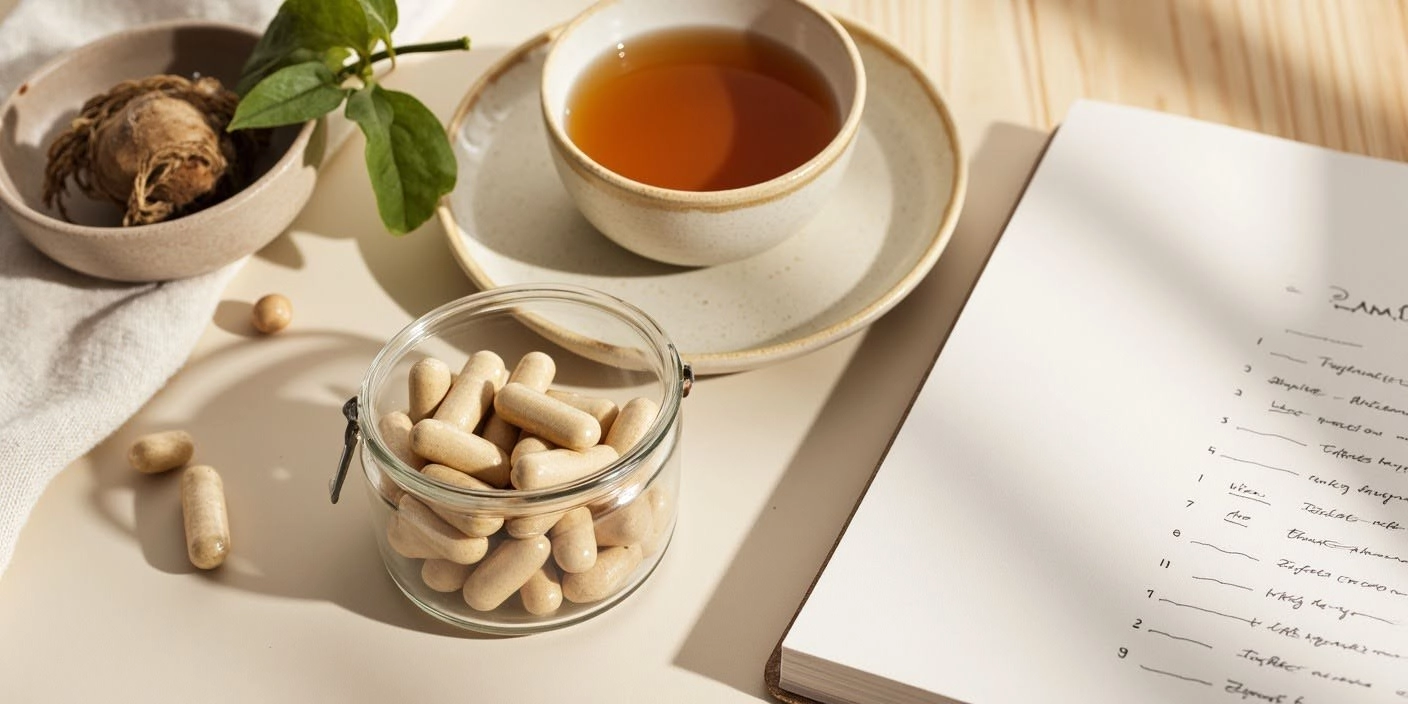
When you’re in the thick of the PMDD storm, it’s easy to reach for anything that promises relief. I remember those desperate moments—the nights of lying awake with a racing heart, the days of irritability so fierce I didn’t recognize myself. PMDD is not “just PMS.” It hijacks your body, your brain, your relationships.
But healing is possible.
Not through a magic pill. Not even through a magic herb.
But through a deeper process—one that brings you home to your body.
And sometimes, nature offers us powerful allies on that journey. Ashwagandha is one of them.
This gentle adaptogen doesn’t erase your PMDD. But it can be a soothing balm.
A steadying hand. One of the puzzle pieces that, when combined with others, supports true healing.
What is Ashwagandha?
Ashwagandha (Withania somnifera) is one of the most well-known herbs in Ayurvedic medicine. For over 3,000 years, it’s been used to strengthen the body, calm the mind, and promote vitality.
Today, we call it an adaptogen—a plant that helps the body adapt to stress and restore balance.
It works not by overriding your body’s natural rhythms, but by gently regulating your nervous system, hormone communication, and energy levels. And when your body is dealing with the hormonal chaos of PMDD, this kind of support can be deeply therapeutic.
Ashwagandha for PMDD: What are the benefits?
1. It regulates the stress response
If you experience PMDD, you probably know what it’s like to feel overstimulated, overwhelmed, and on edge during the luteal phase. Ashwagandha helps regulate cortisol—the hormone released during stress—and reduces the intensity of the fight-or-flight response [1].
In a 2012 clinical study, participants taking Ashwagandha experienced significantly reduced levels of stress and anxiety compared to placebo [2]. For those of us whose PMDD shows up as spiraling anxiety or emotional dysregulation, this can offer real relief.
2. It supports the HPA axis and hormone balance
Ashwagandha’s effects go beyond stress.
It supports the HPA axis (hypothalamic-pituitary-adrenal), which is deeply interconnected with hormonal balance [3]. When this system is under chronic stress, it can throw off your progesterone, estrogen, and neurotransmitter levels—all key players in PMDD symptoms.
By gently supporting the HPA axis, Ashwagandha helps bring more harmony to the entire hormonal orchestra.
3. It improves sleep and energy
Sleep disturbances are a common (and cruel) part of PMDD. Ashwagandha has been shown to improve sleep quality and reduce insomnia, especially in people dealing with stress [4]. Better sleep means better mood, clearer thinking, and more resilience—especially during that crucial luteal phase.


How to take Ashwagandha for PMDD
There's no one-size-fits-all, but here's a general guide:
- Form: Look for KSM-66 ashwagandha - a patented, highly concentrated and bio-available, full spectrum ashwagandha extract with 5% concentration of withanolides. Capsules and liquid extracts are easiest to dose. Powders can be added to smoothies or golden milk, but some find the taste intense.
- Dosage: The recommended dose of KSM-66 per day to combat stress is 300 - 500mg root extract standardized to at least 1.5% withanolides. Most clinical studies use between 300–600 mg of a standardized extract daily [5]. Always start low and check with a practitioner.
- Timing: KSM-66 should be taken with meals or 30 minutes before bedtime as it can cause a sedative effect. For PMDD, some prefer to take it throughout the cycle, others only during the luteal phase (ovulation to menstruation).
What to be mindful of
Ashwagandha is generally safe, but it’s not for everyone.
Make sure to consult with your practitioner before supplementing with ashwaganda if you’re pregnant, breastfeeding, have hyperthyroidism, or are taking sedatives or thyroid medication. Side effects are rare but can include digestive upset or drowsiness.
As always, it’s best to work with someone who understands the nuances of your body and your symptoms.
Final thoughts
When I began experimenting with adaptogens, Ashwagandha was one of the first I tried. I didn’t expect miracles—and I didn’t get them. But I did notice a quiet yet powerful shift. A deeper breath. A shorter rebound time after a luteal spiral. I started sleeping better. I felt a little more like myself.
Over time, it became a grounding part of my routine. Not a cure—but a companion.
And that’s what I want to emphasize. As I shared in my article on adaptogens for PMDD, these herbs are helpers—not saviors. They support the process, but they’re not the whole process.
Healing PMDD requires a multi-layered approach:
- Understanding your cycle and your unique rhythm
- Nourishing your body with real, anti-inflammatory food
- Mapping your symptoms with compassion and curiosity
- Regulating your nervous system through movement, rest, and inner work
- And yes, sometimes bringing in herbs like Ashwagandha to gently support you through it all
You don’t have to do this alone.
If you’re feeling lost in the hormonal chaos, unsure of where to start or what your body is trying to tell you—I invite you to book a 1:1 session with me. Together, we can map your symptoms, decode your cycle, and craft a healing path that’s rooted in who you are and what you need.
While adaptogens can be powerful allies, remember that managing PMDD requires a multi-faceted approach.
- 10% OFF my favorite adaptogens for PMDD (US Residents Only): https://us.fullscript.com/welcome/jfleming1692058147
- Listen to the PMDD Pep Talk Podcast
- Work with us
- https://courses.hermoodmentor.com/offers/Amd9gW98
Find us on Instagram @hermoodmentor for more education + resources.
Keep in mind, healing from PMDD isn’t about chasing a symptom-free life—it’s about building resilience and discovering the tools that truly support you. Adaptogens, like Ashwagandha, can be a meaningful part of that toolkit, offering steady, gentle support as you navigate your unique PMDD path.
[Disclaimer: This information is for educational purposes only and should not replace medical advice. Always consult with healthcare providers before starting any new supplement regimen, especially if you have existing health conditions or take medications.]
References
- Chandrasekhar K, Kapoor J, Anishetty S. A prospective, randomized double-blind, placebo-controlled study of safety and efficacy of a high-concentration full-spectrum extract of Ashwagandha root in reducing stress and anxiety in adults. Indian J Psychol Med. 2012;34(3):255–262.
- Lopresti AL, Smith SJ, Malvi H, Kodgule R. An investigation into the stress-relieving and pharmacological actions of an ashwagandha (Withania somnifera) extract: A randomized, double-blind, placebo-controlled study. Medicine (Baltimore). 2019;98(37):e17186.
- Singh N, Bhalla M, de Jager P, Gilca M. An overview on Ashwagandha: A Rasayana (rejuvenator) of Ayurveda. Afr J Tradit Complement Altern Med. 2011;8(5 Suppl):208–213.
- Langade D, Kanchi S, Salve J, Debnath K, Ambiye VR. Clinical evaluation of the safety and efficacy of Ashwagandha root extract in the elderly for improvement of general well-being and sleep: A randomized double-blind, placebo-controlled study. Cureus. 2019;11(12):e5790.
Tandon N, Yadav SS. Contributions of Indian Council of Medical Research (ICMR) in the field of medicinal plants and traditional medicine. Indian J Med Res. 2020;151(2–3):91–99.